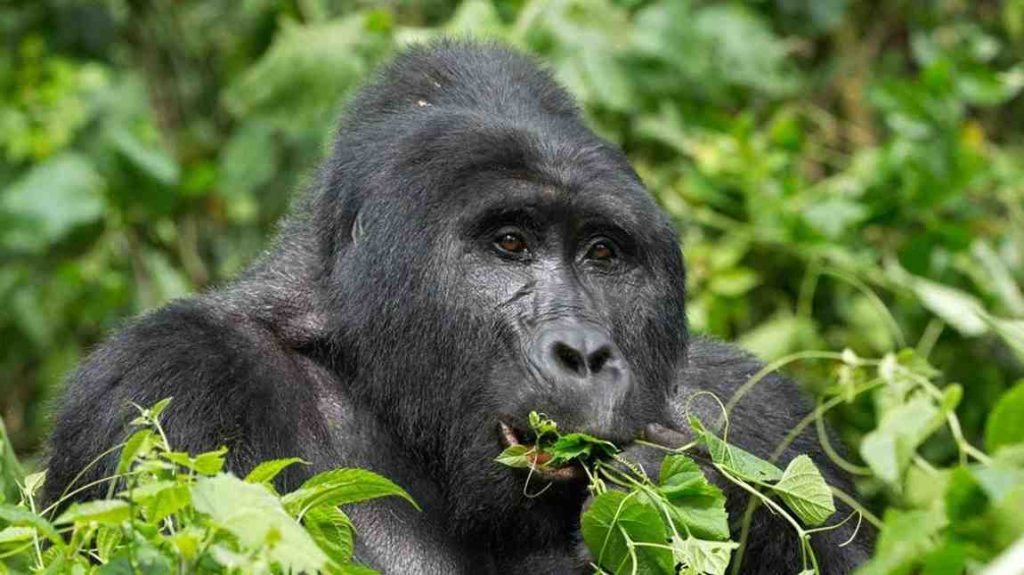

Gorilla Families in Uganda
Gorilla families in Uganda mostly live in Bwindi Impenetrable National Park and Mgahinga Gorilla National Park. These parks offer travelers a rare opportunity to observe mountain gorillas in their natural habitat while supporting conservation and local communities. Every trek reveals unique gorilla behavior, landscapes, and unforgettable wildlife encounters.
Uganda Gorilla Families in Bwindi Impenetrable National Park
Mountain gorillas move through the forest daily and rarely stay in one place. Visitors track gorilla families across four Bwindi regions: Buhoma, Rushaga, Ruhija, and Nkuringo. No trekking route guarantees a shorter or longer experience because terrain and gorilla movement determine trekking time.
Buhoma Area Gorilla Families
The Buhoma sector hosts seven habituated gorilla families that allow tourist visits:
- Rushegura Gorilla Family with 17 individuals
- Habinyanja Gorilla Family with 12 individuals
- Mubare Gorilla Family with 8 individuals
- Binyindo Gorilla Family with 9 individuals
- Muyambi Gorilla Family with 6 individuals
- Katwe Gorilla Family with 7 individuals
Habinyanja Gorilla Family
Habinyanja ranks among the first families that researchers habituated in Buhoma in 1997. The group includes 18 gorillas and lives in the Buhoma area. Tourists first visited this family in 1999.
The name “Habinyanja” comes from a local word meaning a water body. Researchers first led the group under silverback Mugurisi, who died of old age. After his death, Mwirima and Rwansigazi shared leadership but disagreed on movement patterns. Mwirima preferred staying near home while Rwansigazi preferred long travel routes. Their conflict led to a split in 2002, and Makara took leadership as the dominant silverback.
Tourists spend 3 to 8 hours tracking this family depending on movement. An experienced alpha female named Kisho also plays a strong leadership role in the group.
Mubare and Katwe Gorilla Families
Mubare represents the oldest habituated gorilla family in Uganda. Researchers started habituation in 1991 after discovering the group near Mubare Hills. The family includes 9 members with 1 silverback and lives in Buhoma.
The group originally included 12 members under silverback Ruhondeza. Over time, internal conflicts and external fights reduced the group size. After Ruhondeza died, only 5 members remained. In 2013, new members and a silverback joined, which restored stability and created a stronger group for visitors.
Katwe stands as one of the newest habituated families in Buhoma. The group includes 7 members: 1 silverback, 2 adult females, 2 blackbacks, and 2 sub-adult females. Silverback Mahaane leads the group.
Rushegura Gorilla Family
Researchers habituated the Rushegura group in 2000, and tourists first visited it in 2002. The family includes 19 members with 1 silverback and lives in Buhoma.
The group split from Habinyanja when two silverback brothers separated. The name Rushegura comes from a local tree species called “Ebishegura” that grows in the area.
Silverback Mwirima leads a calm and stable group in his 20s. Tourists appreciate this family for its peaceful behavior and frequent sightings.
Bitukura Gorilla Family (Ruhija)
Bitukura ranks among the newer gorilla families in Bwindi. The group lives in the Ruhija sector and includes 14 members with 4 silverbacks.
The family takes its name from a river where researchers first spotted it. The group originally included 24 members but some gorillas left after internal disputes and formed new groups elsewhere.
Kyaguriro A Gorilla Family
Kyaguriro A includes 7 members and lives in Ruhija. Researchers manage this group strictly for scientific research and do not allow tourist visits.
Oruzogo Gorilla Family
Oruzogo includes 16 members and lives in Ruhija. Silverback Tibirikwata leads the group. Researchers opened this family for tourism in 2011.
Visitors usually travel from Buhoma and then drive to Ruhija for orientation before trekking.
Mukiza Gorilla Family
Mukiza evolved from the Kyaguliro group after silverback Rukina died. After his death, Mukiza took leadership and formed a new group structure within the same population.
Kyaguliro B Gorilla Family
Kyaguliro B split from Kyaguliro A after leadership changes following the death of silverback Rukina. The group includes 8 individuals and researchers have not yet added it to the official booking system.
Happy Gorilla Family
The Happy Gorilla Family includes 5 individuals. Researchers fully habituated this group, and conservation teams plan to include it in the Central Reservation System soon.
Rushaga Area Gorilla Families
Rushaga sector hosts 10 habituated gorilla families:
- Nshongi Gorilla Family
- Bweza Gorilla Family
- Mucunguzi Gorilla Family
- Kahungye Gorilla Family
- Bikingi Gorilla Family
- Mishaya Gorilla Family
- Kutu Gorilla Family
- Busingye Gorilla Family
- Rwigi Gorilla Family (7 individuals)
- Tindatine Gorilla Family
Nshongi Gorilla Family
Nshongi once stood as the largest habituated gorilla group with 36 members. Researchers introduced it in 2009 after discovering it near the Nshongi River.
Silverback Nshongi leads the current group of 18 members. The group split in 2010 when Mishaya left with several members to form a new family. Another split in 2013 created the Bweza group.
Visitors also see many other primates, birds, and butterflies in this forested area.
🦍 Mishaya Gorilla Family
Mishaya includes 7 members. Silverback Mishaya left the Nshongi group in 2010 with several females and built his own group. He actively competed for females from other groups and expanded his family.
Tourists reach the trailhead within 30 minutes from Rushaga headquarters.
Kahungye Gorilla Family
Kahungye includes 13 members. Silverback Rumansi leads the group alongside other males Rwigi and Ruhamuka.
Researchers opened the group for tourism in 2011. The group later split when silverback Busingye left to form his own family.
🦍 Bweza Gorilla Family
Bweza includes 7 members with 1 silverback. The group originated from Mishaya’s split from Nshongi in 2010. Later, Bweza separated again in 2012 with several members and established independence.
Busingye Gorilla Family
Busingye includes 9 members. Silverback Busingye left Kahungye in 2012 to form his own group. He actively competes with other males and often captures females from rival groups.
Rwigi Gorilla Family
Rwigi includes 7 members. The group split from Bweza and continues to grow independently in Rushaga.
Tindatine Gorilla Family
Tindatine includes 8 members. The group split from Kahungye and continues to develop its own stable structure.
Nkuringo Area Gorilla Families
Nkuringo sector hosts four gorilla families:
- Nkuringo Gorilla Family (13 individuals)
- Bushaho Gorilla Family (8 individuals)
- Christmas Gorilla Family (8 individuals)
- Posho Gorilla Family (17 individuals)
Nkuringo Gorilla Family
Nkuringo means “round hill” in the Rukiga language. Researchers first habituated this group in 2004 after repeated crop-raiding incidents near local farms.
Silverback Nkuringo led the group until his death in 2008. Safari then took over leadership. The group experienced further changes when twin gorillas were born, although one later died.
This group offers one of the most challenging treks in Uganda due to steep terrain, but visitors always describe the experience as rewarding and unforgettable.
Bushaho Gorilla Family
Bushaho includes 8 members. Silverback Bahati leads the group in the Nkuringo sector.
Christmas Gorilla Family
Christmas includes 8 members. Silverback Christmas leads the group and gives the family its name.
Posho Gorilla Family
Posho includes 17 members. Silverback Magara leads the group. Researchers fully habituated the group in 2023, but conservation teams have not yet added it to the booking system.
Inconclusion
Uganda’s gorilla families offer unforgettable wildlife encounters across Bwindi and Mgahinga. Each group shows unique behavior, history, and leadership dynamics. Gorilla trekking also supports conservation and local livelihoods.
Plan your safari with Bugoma Palms Safaris for a professional and memorable gorilla trekking experience in Uganda.